Networked Beings

In the world with no Oxygen, how would you breathe? When all the connections are severed, how would you connect?
Speculative Embodied Interaction Design
Is still possible to provide humans with a connected human experience not through artificial environments but by actually designing for people to recognize that they are part of a bigger network not only between human and non-human but also between organic and non-organic?

My Role

Interaction Designer teammate
Lead mask prop-maker
Artist

My Responsibilities

• Ideation and concepting with the rest of the team
• Prop-making - created the shape of masks
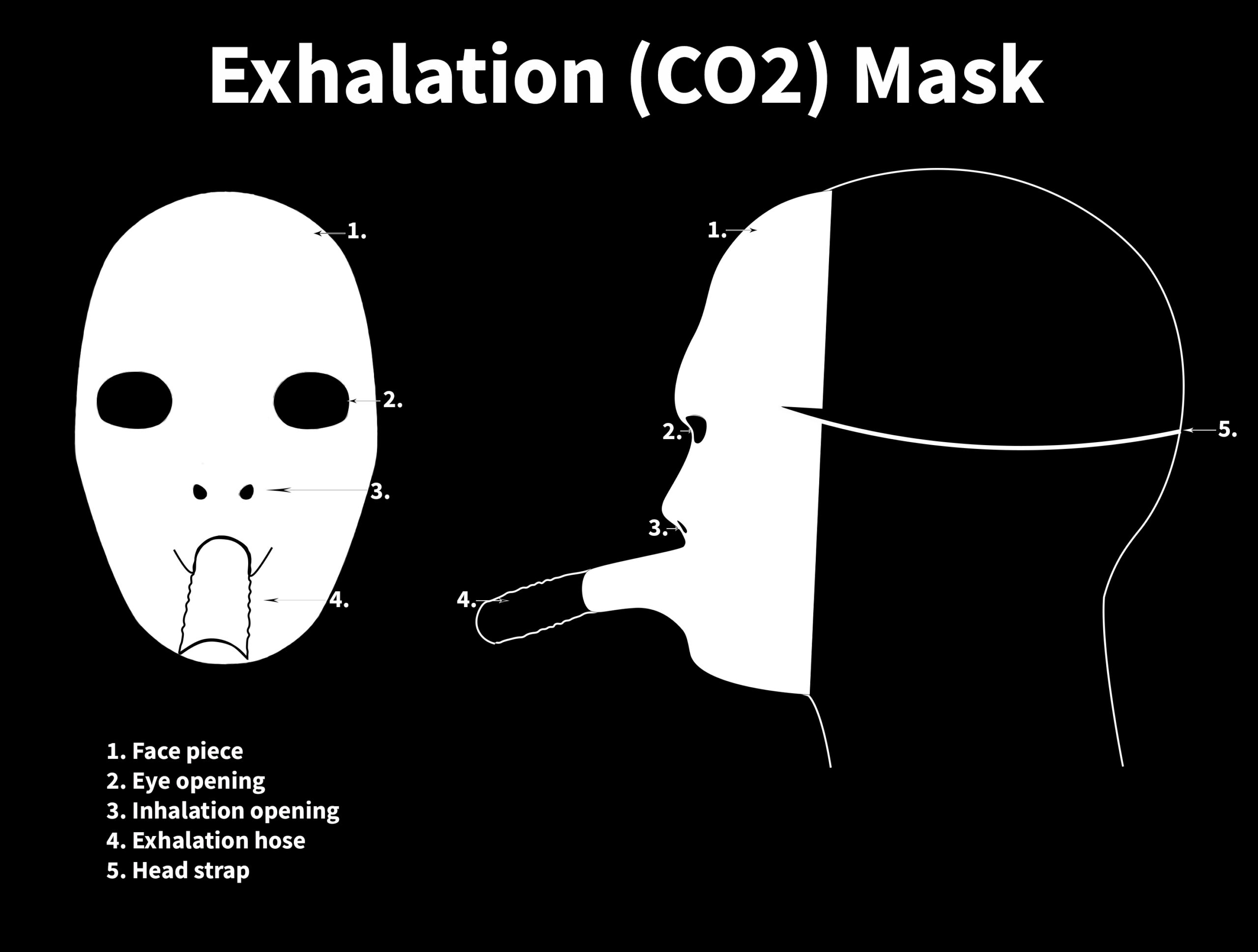
• Visualized prototype elements - created schematic visuals to explan different elements of the prototype
• Storyboarding - created storyboards to visualize interaction with the prototype

Team

Love Lagerkvist
Karim Mortada Mohamed Mahmoud
Elizabeth Matkiewicz
Tirsa Rosalba Ramos-Pedersen
Miha Žgank

Problem

Make people conscious of their impact on the existing network within nature, “How can Embodied Interaction facilitate connections between beings in such a way as to respond to extreme climate conditions?”

Process

First we explored existing literature, did bodystorming, brainstorming, and digital sketching.
Later, through digital and physical prototyping we created a living and breathing system.

Outcome

The final prototype includes masks, belts, and a pedestal with a sealed floral being. The role of the prototype was not to produce a solution, but to facilitate the understanding and
provoke a discussion, raising the consciousness about human action and consequences in a larger system of beings.

PROCESS

Goals

To make people conscious of their impact and call attention that as a civilization, we are heading down a road that leads to extreme climate conditions

Target Group

Humans

Constraints

Time. This project was part of a Embodied Interaction course that lasted 6 weeks.

Tools

Adobe Photoshop
Pen & paper
Arduino

Discovery

Ideation

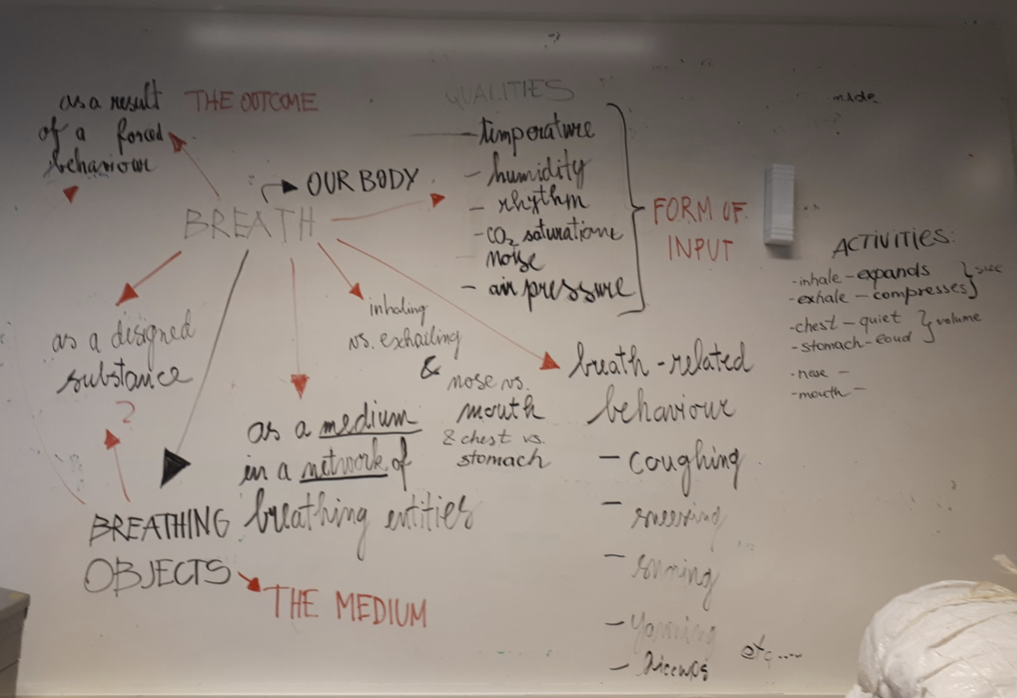
The process began with understanding the brief “breathing/air”.
The group work opened with sharing thoughts along with defining
breathing and connections in order to understand what it could be.
The possible scenario setting for the project was discussed and the
first research question was formed “Is there a way to facilitate a
connection in the network of beings of a future where environments
are conditioned by climate change?” Later in order to make it
clearer the question was changed to “How can Embodied
Interaction facilitate connections between beings in such a way as
to respond to extreme climate conditions?” 

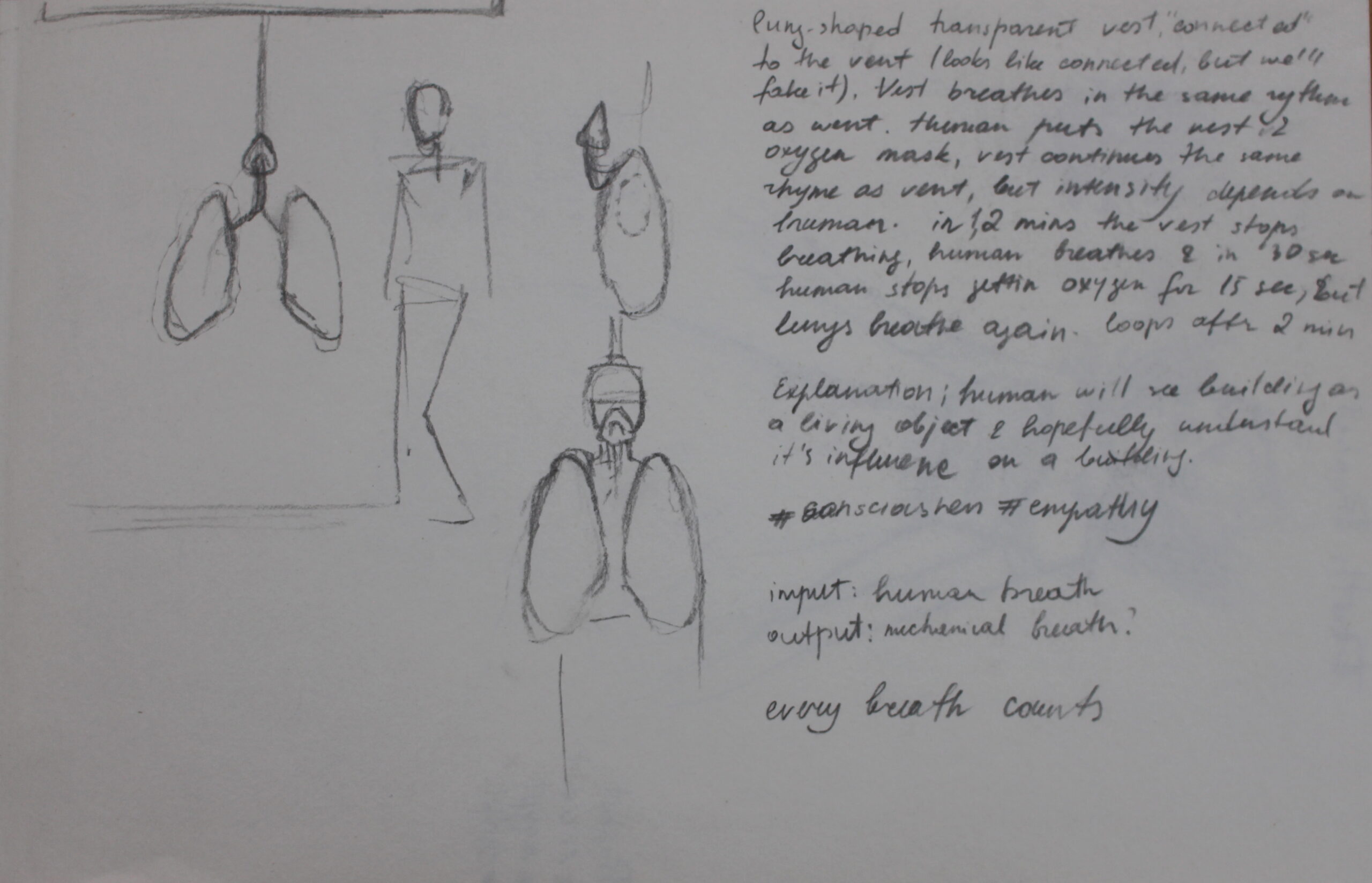
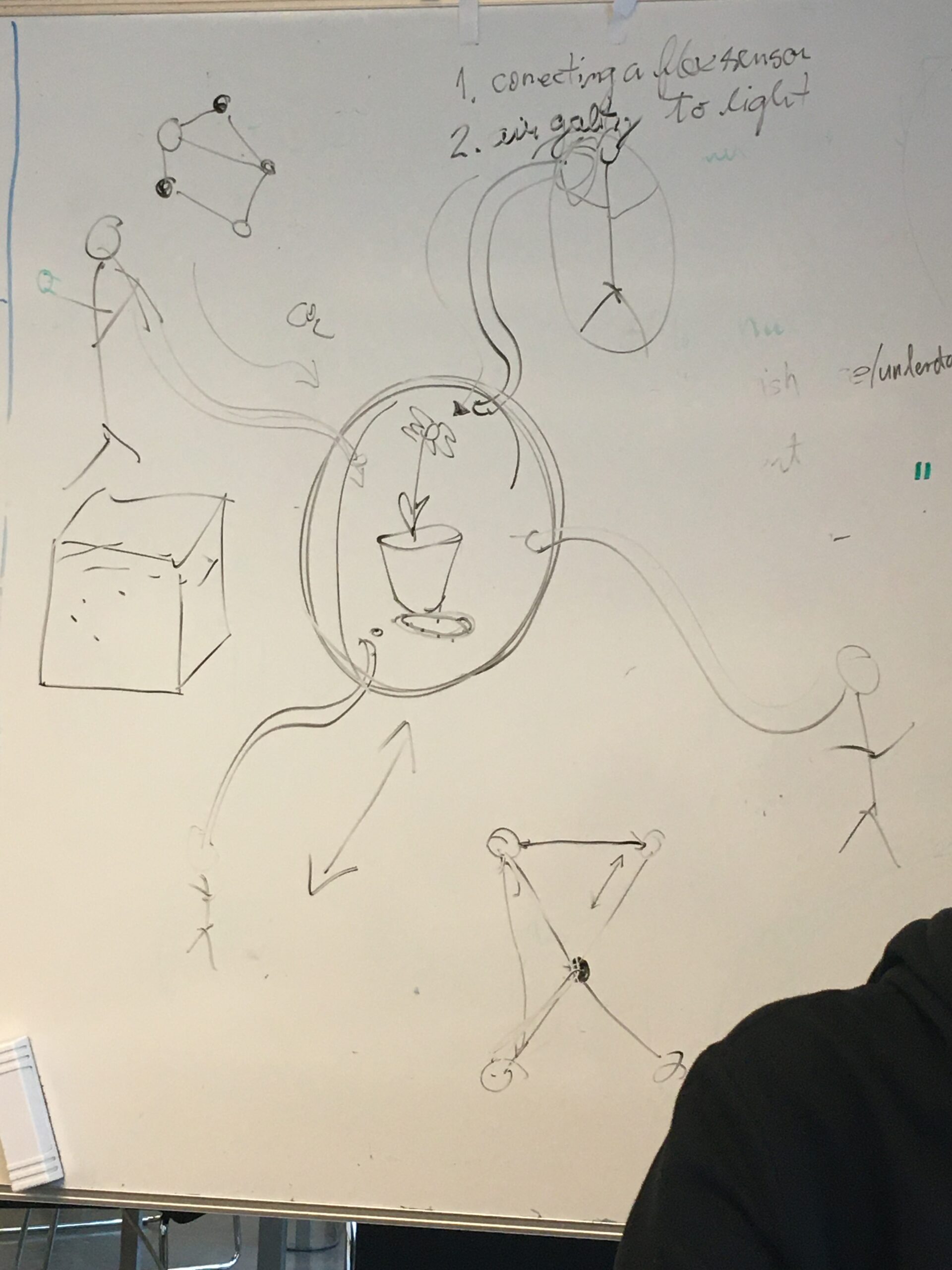
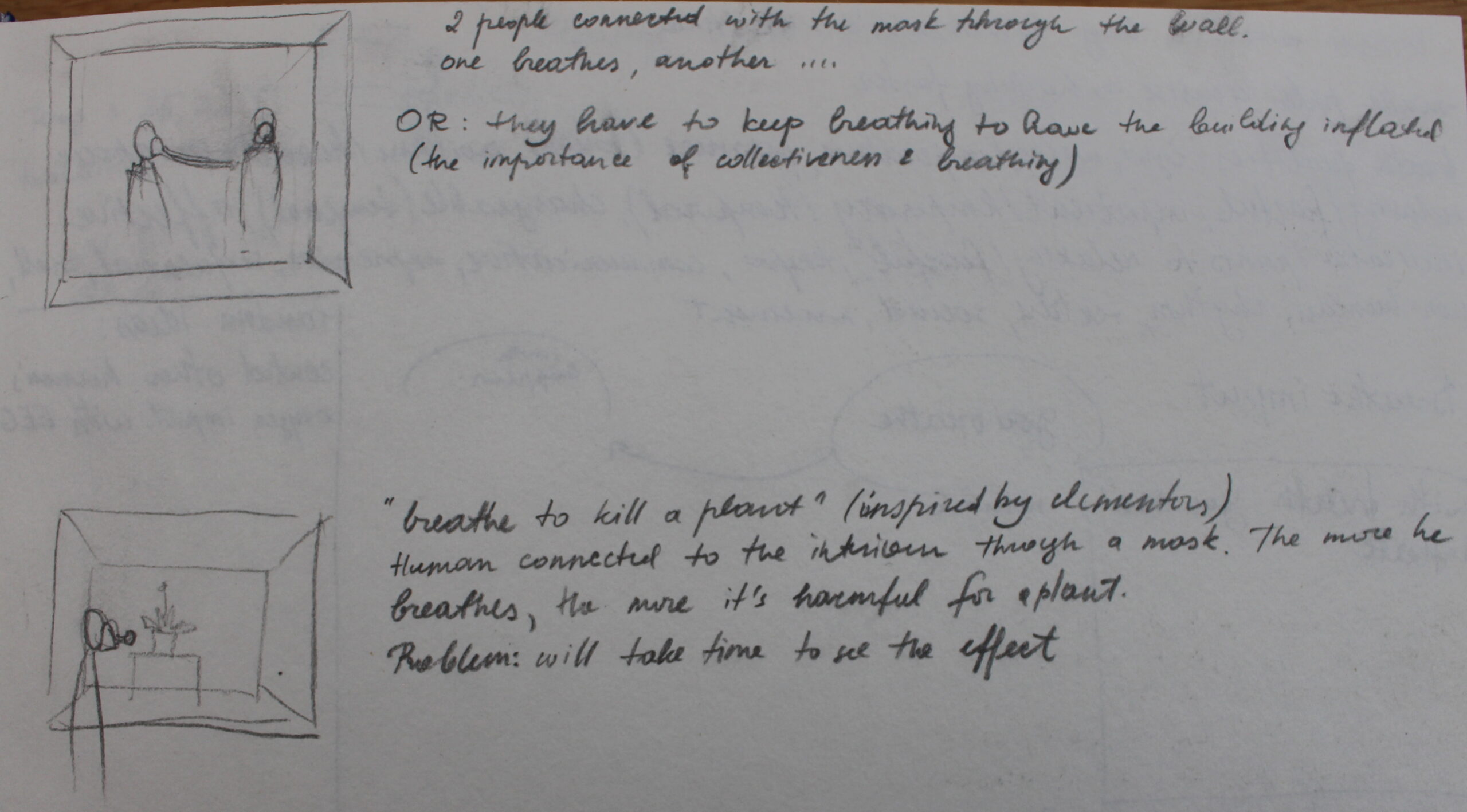
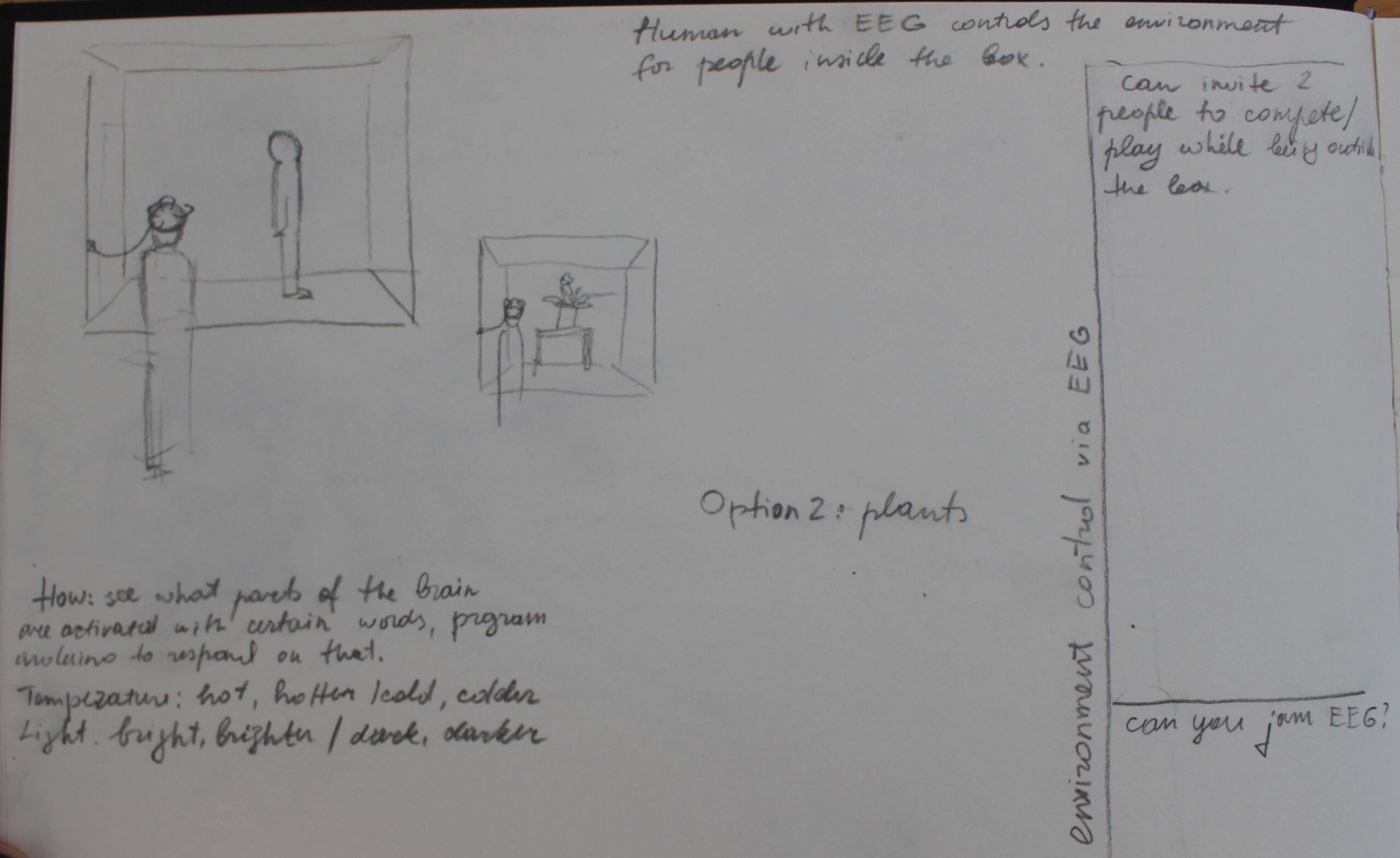
Despite the formed question, the it part stayed open for a while so that the design group could concentrate on digital sketching with different sensors, including Arduino and EEG. The next steps consisted of refining sketches and narrowing it to focus on prototyping.
Ideating on the topic together and independently.

Delivery

Prototype

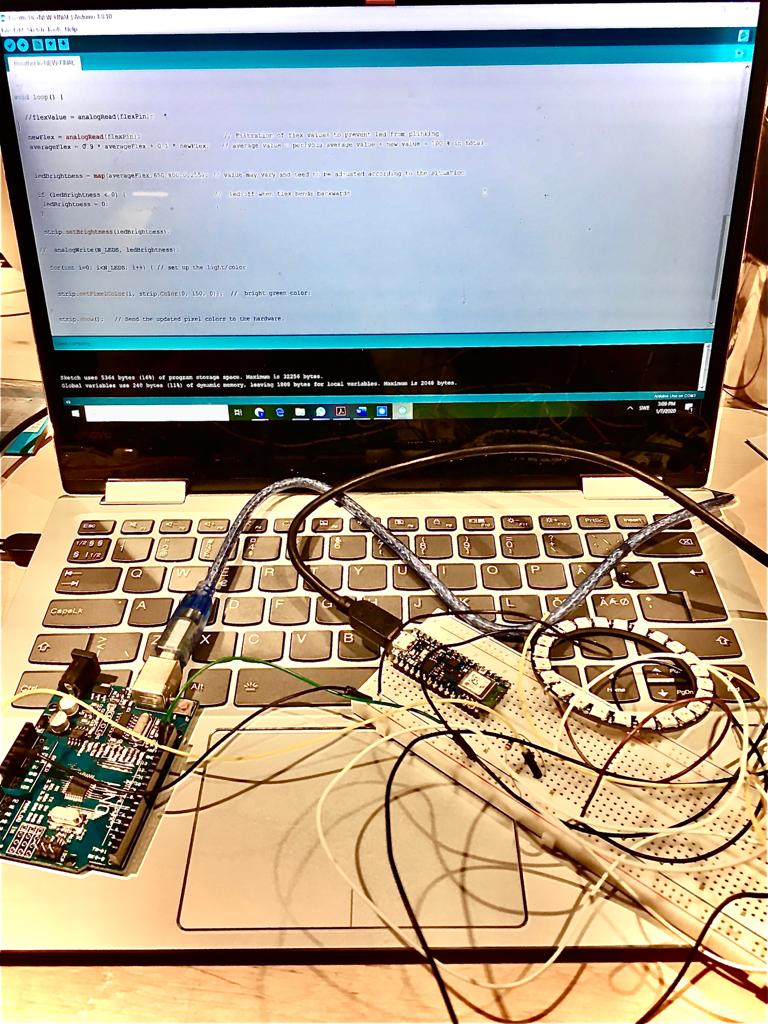
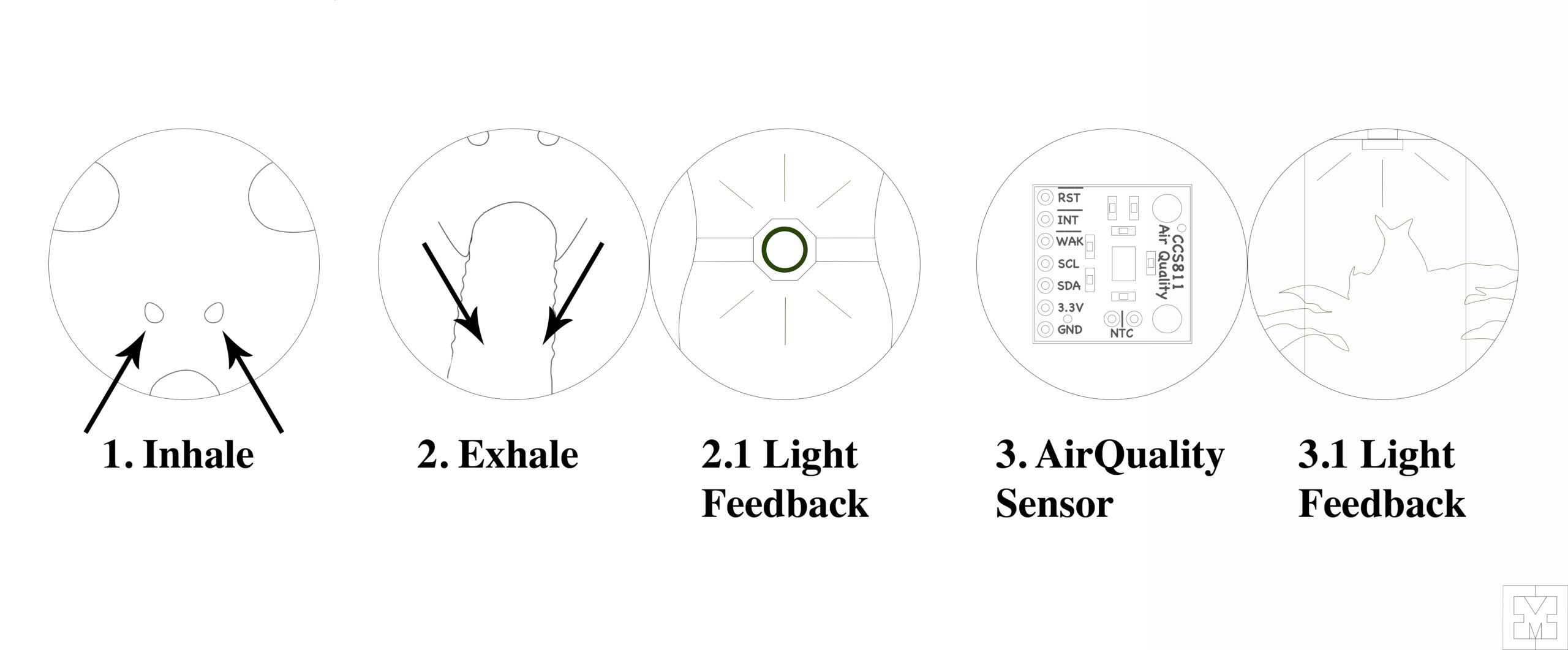
After rounds of fails, trials, and following discussions sensors were narrowed down to work with: flex sensors, AirQuality sensors, Neopixel LED ring - all powered with Arduino platform. These sensors were used to be incorporated into belts and the pedestal.
Other teammates working hard on the physical prototype.

Masks

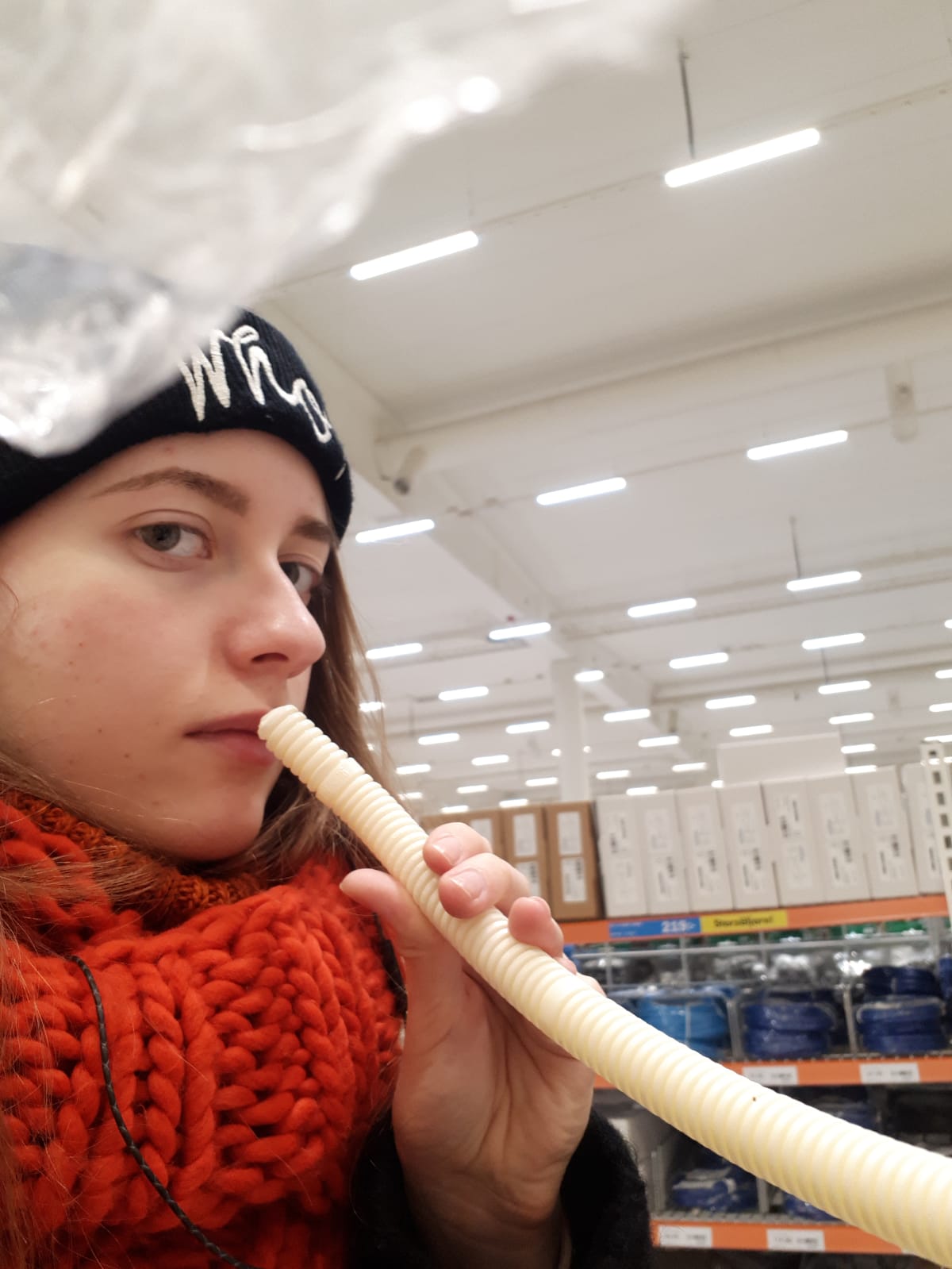
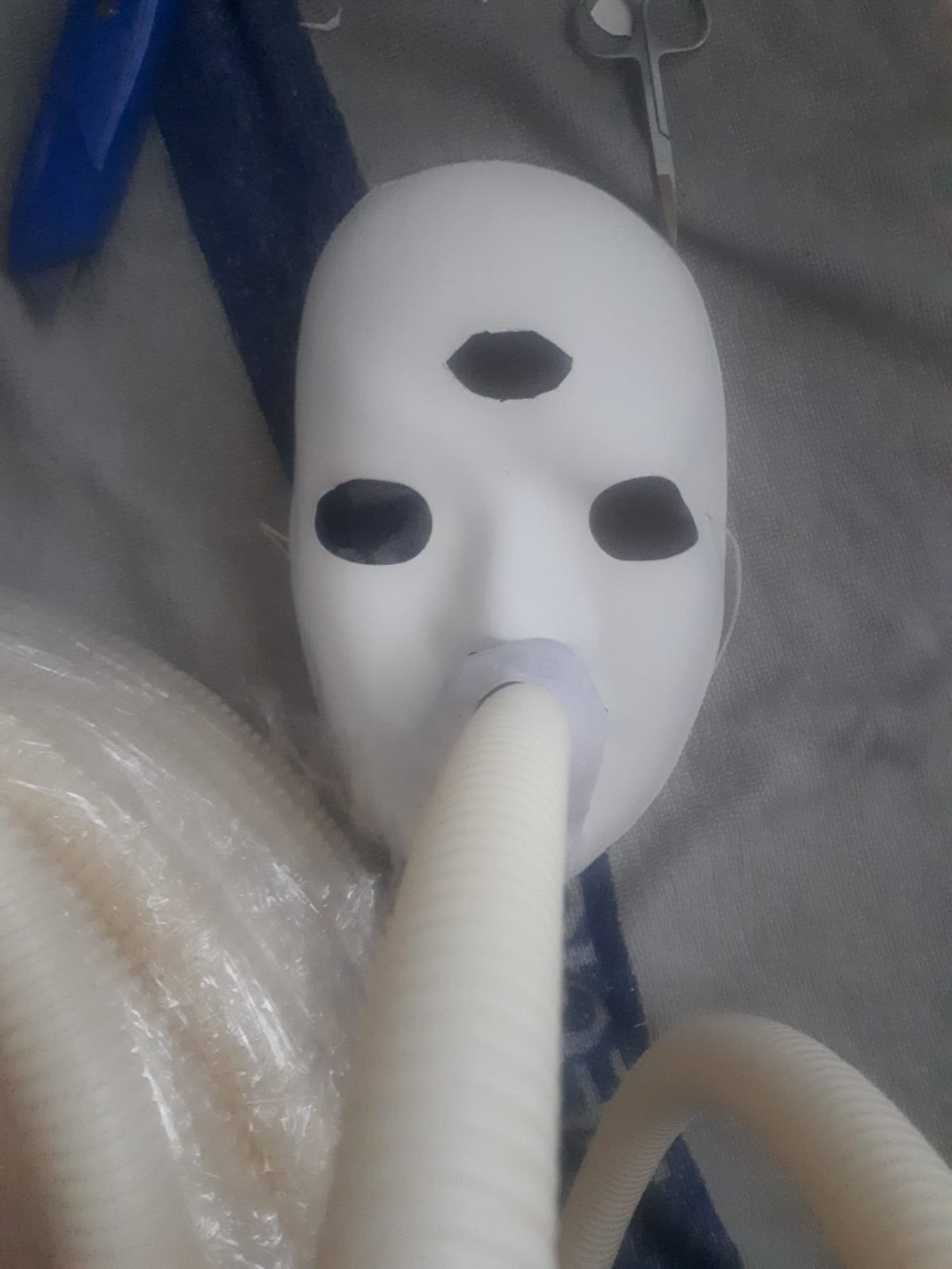
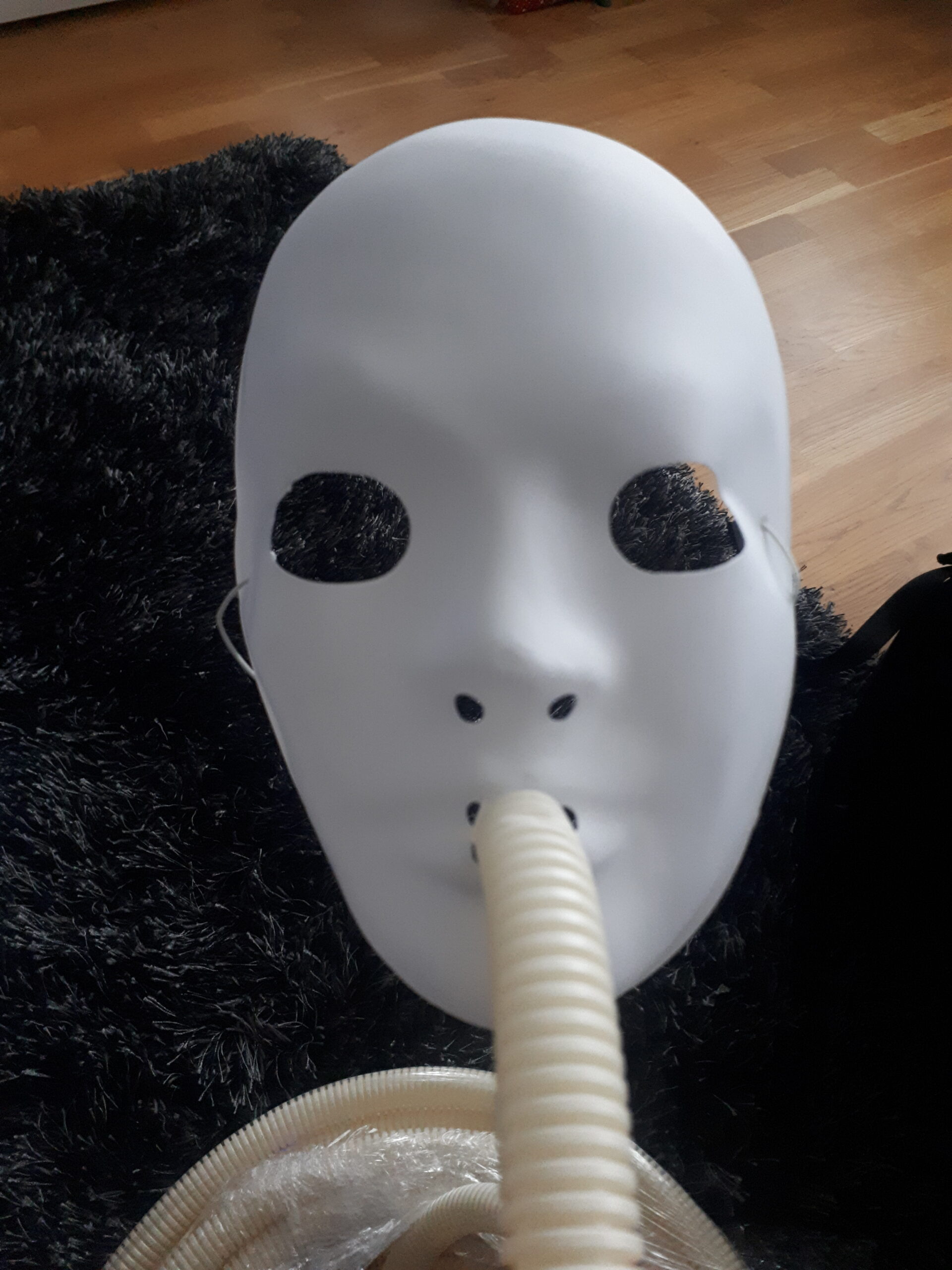
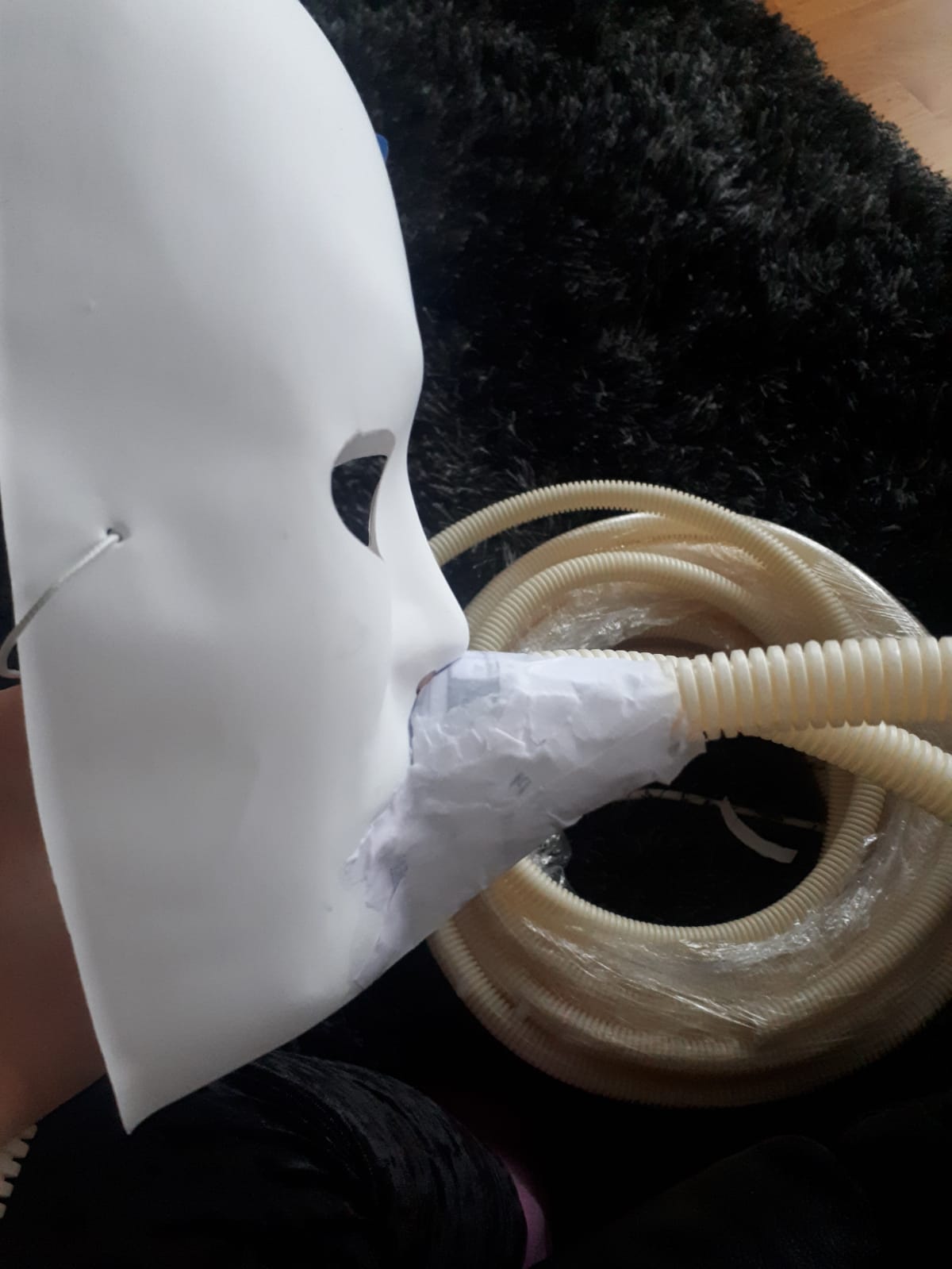
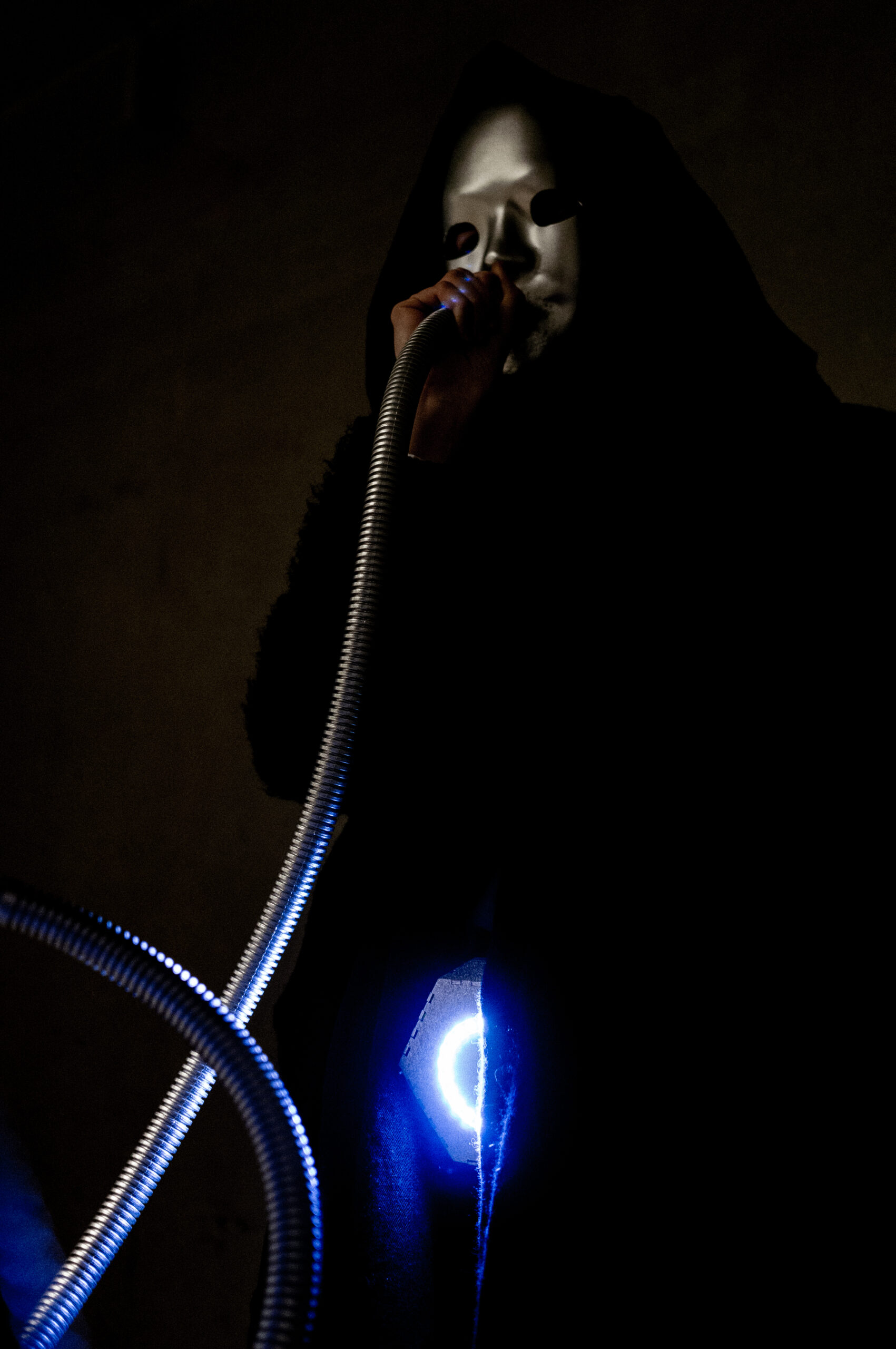
While the rest of the team was busy with making the code work, my task was to create 3 masks. I used pre-bought masks and hoses and connected the two with the papier-mache technique. Later, the masks were painted by other team members, as I became sensitive to spray paint smell. The belts and the pedestal were created by other team members.

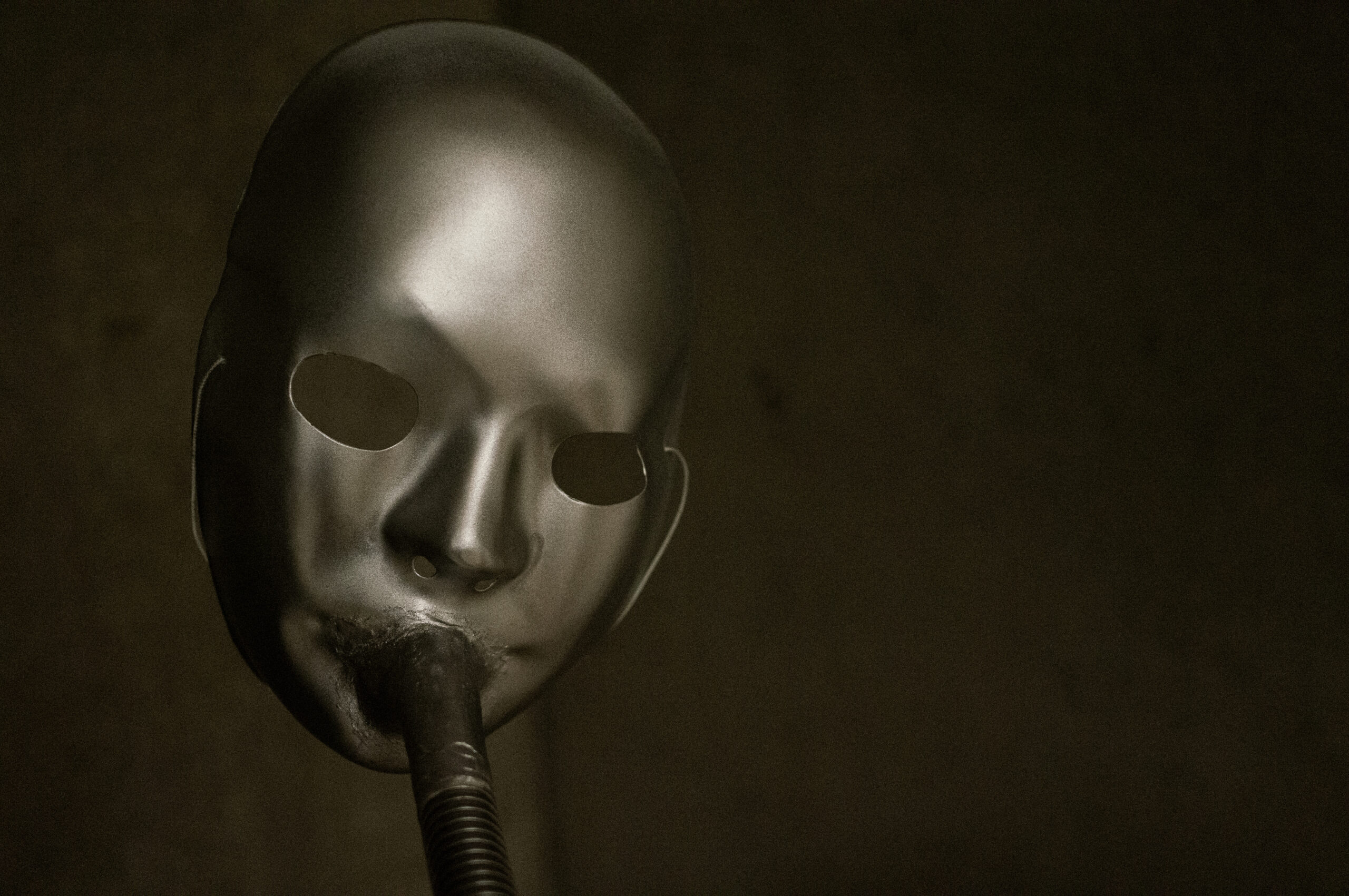
Why the masks? The reason for using a whole face-covering mask is to take away individuality and move away from a person to create a node of the breathing network. There is no individual in this node, just a system of connected beings.
Me creating the mask. Trying things in the process but ultimately opting for minimalism.

OUTCOME

The final prototype includes masks, belts, and a pedestal with a sealed floral being. It takes 3 participants to activate the prototype. Each participant puts on a belt, which measures breath from the stomach movement and provides individual light feedback. The participants also put on masks, which are connected to the pedestal. AirQuality sensors incorporated into the pedestal measure the level of CO2 the participants exhale through the mouth into the mask's hose. If it is produced "enough" CO2 for the floral being, there will be collective feedback in a form of light.
Final prototype.

REFLECTIONS

What I learned

• The body within Interaction Design
• Tried Arduino
• Digital sketching
• How to write academic papers
• How to use academic papers for research and writing
Video and high-quality pictures of prototype: Love Lagerkvist
linkedin facebook pinterest youtube rss twitter instagram facebook-blank rss-blank linkedin-blank pinterest youtube twitter instagram